
Beyond the Headcount: 3 Signs Your Support Team Scaling Strategy is Broken (How to Fix It).
Your company is growing. It’s the moment you’ve been working towards – new customers, surging demand, a product that’s finally hitting its stride. But the celebration is short-lived. Your support queue is overflowing, your CSAT scores are starting to dip, and your best support agents look like they haven’t slept in a week.

You know you need to hire, and you need to do it yesterday.
For leaders at fast-growing tech companies, this is a familiar, high-stakes scenario. The temptation is to simply “add headcount”—to get more bodies in seats as quickly as possible. But scaling isn’t just about increasing numbers; it’s about scaling excellence. And all too often, the frantic rush to hire leads to critical, costly mistakes.
If you’re just focused on filling roles, you’re not just hiring; you’re likely falling into one of these three scaling traps that can sabotage your growth and damage your brand.

Trap 1: You're Mistaking Hiring for Onboarding.
You’ve just spent months and a significant budget to find the perfect candidate. They’re skilled, enthusiastic, and ready to make an impact. Then, on their first day, you ship them a laptop, email them a list of logins, and point them to a knowledge base. You call it “onboarding.”
In reality, you’ve left them on a digital island.
For remote teams, onboarding isn’t an administrative checklist; it’s the single most critical phase for integration, retention, and long-term success. A weak, unstructured onboarding process is a leaky bucket. It creates confusion, erodes the new hire’s confidence, and is the number one cause of high turnover in the first 90 days. You’re losing your best talent before they’ve even had a chance to truly begin.
The Fix: Build a High-Touch, 90-Day Integration Plan. A world-class remote onboarding experience is a meticulously planned journey. It should include a dedicated onboarding buddy, structured training modules, regular check-ins with leadership, and clear 30-60-90 day goals. The aim isn’t just to get them answering tickets; it’s to deeply embed them in your company’s culture, mission, and way of working.
Trap 2: You're Ignoring the "Empathy Gap."
In the rush to scale, it’s easy to prioritize what’s easily measured: technical proficiency, software knowledge, typing speed. You can test for these skills. But what you can’t easily test for—and what truly defines a world-class support experience—is empathy.
Hiring for skill alone creates a team that can close tickets efficiently but can’t build relationships. They can follow a script but can’t navigate a sensitive human conversation. They become a team of problem-solvers who inadvertently create brand problems. In the world of SaaS and tech, where your support team is your brand, this “empathy gap” is fatal. It leads to customer churn that no amount of technical skill can fix.

The Fix: Hire for Empathy, Train for Skill. You must treat emotional intelligence and communication skills as non-negotiable prerequisites, not as soft skills. This means shifting your hiring process to include behavior-based interview questions that reveal how a candidate handles pressure, ambiguity, and human frustration. It also means looking for talent in regions, like the Caribbean, that are culturally known for high-touch communication and innate warmth. You can always teach someone your software; you can’t teach them to genuinely care.
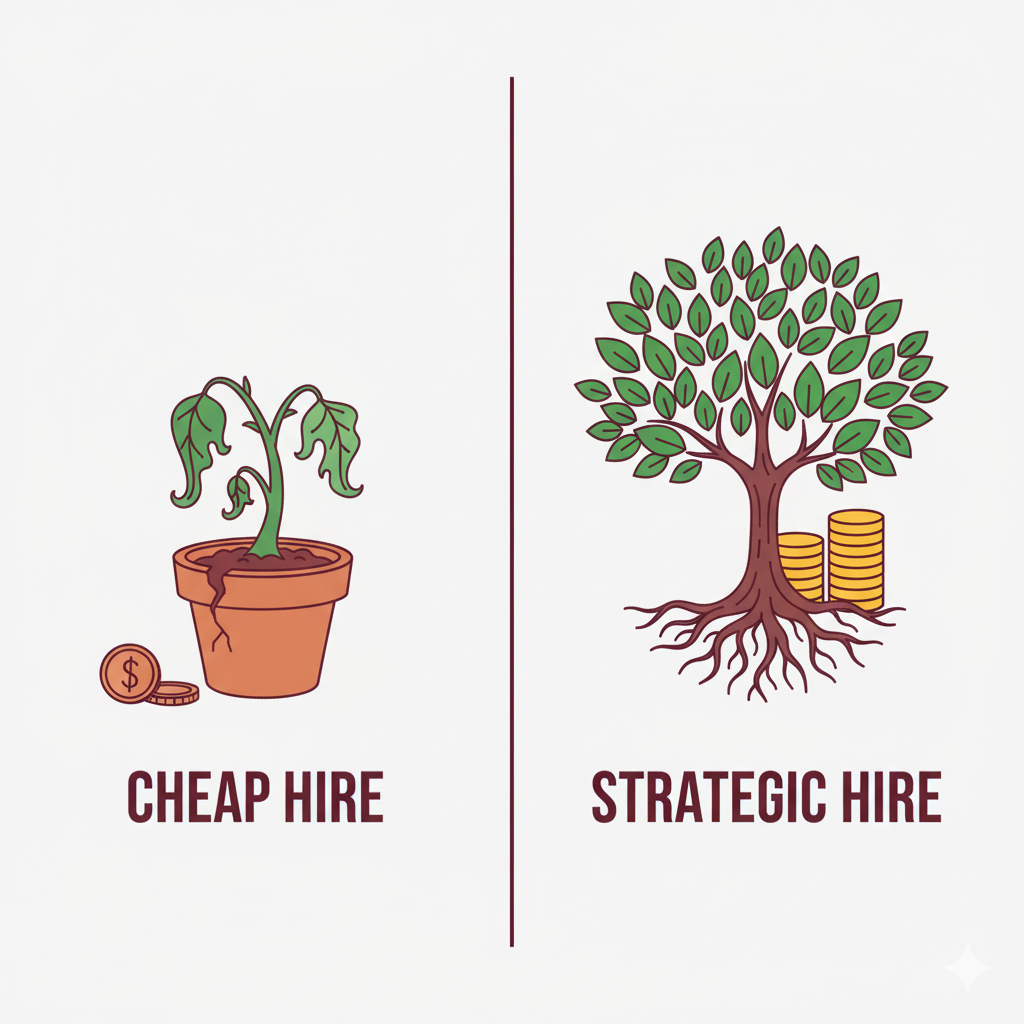
Trap 3: You're Chasing Cost Savings Instead of Strategic Value.
Let’s be direct. When leaders look for “cost-effective” remote talent, many are really looking for “cheap.” And “cheap” is the most expensive mistake a growing company can make.
Hiring the lowest-cost option is a race to the bottom. It gets you high turnover, inconsistent quality, communication barriers, and a support team that can actively damage your brand. You spend more time and money re-hiring, re-training, and cleaning up the messes left behind. The initial savings are quickly erased by the long-term cost to your reputation and your bottom line.
The Fix: Reframe the Conversation Around ROI. A truly strategic leader doesn’t ask, “How can I cut costs?” They ask, “How can I create the most value?” The smart play isn’t finding the cheapest labor; it’s finding the best possible talent in a location that provides a strategic financial advantage. Investing in a high-retention, high-performance team from a region like the Caribbean isn’t a cost-cutting measure; it’s a strategic move that pays massive dividends in customer loyalty, reduced churn, and long-term lifetime value.
Your Support Team is a Growth Engine, Not a Cost Center.
Your customer support and IT helpdesk teams are not just a line item on a spreadsheet; they are the engine of your retention and the guardians of your brand. Scaling them effectively isn’t about throwing bodies at a problem. It’s about a deliberate, strategic approach to hiring, onboarding, and nurturing talent.
By avoiding these common traps, you can build a team that doesn’t just keep up with your growth—it accelerates it.
Ready to scale your support team the right way?
Schedule a no-obligation strategy call with us today, and let’s build your competitive advantage together.